
NEW: Onshore Inspections
The Flux
A robust handheld system for corrosion detection and 3D mapping of unpiggable pipelines.
Discover the Flux
Inspect The Unpiggable
NEW: Onshore Inspections
A robust handheld system for corrosion detection and 3D mapping of unpiggable pipelines.
Discover the Flux
NEW Service
Know how fast every coating defect corrodes, in µm/year, validated against excavations.
See how it works
FREE: Whitepaper
How CMI separates protected steel from actively corroding steel, without excavation.
Download
If a pipeline cannot be pigged, its operator still has to know its condition. EMPIT inspects unpiggable pipelines from above ground with Current Magnetometry Inspection (CMI). The survey locates every coating defect, gives a corrosion rate for each one, and maps the position and depth of cover of the line. It is pipeline inspection without pigging: no pig, no excavation, no shutdown.
A pipeline is unpiggable, or non-piggable, when an in-line inspection (ILI) tool cannot travel through it: no launcher and receiver, tight bends, diameter changes, unbarred tees, or a line that cannot be taken out of service. Our article What Is an Unpiggable Pipeline? explains the criteria in detail.
Without ILI data, integrity management relies on cathodic protection and above-ground surveys such as CIPS and DCVG. These surveys find coating defects. They do not show whether external corrosion is active underneath, so operators dig on suspicion, and many of those excavations find no corrosion at all.
For every inspected section you receive:
All results come as a report and in the EMPIT Pathfinder web app, on a map, defect by defect. You see which defects need action and which do not. See all services.
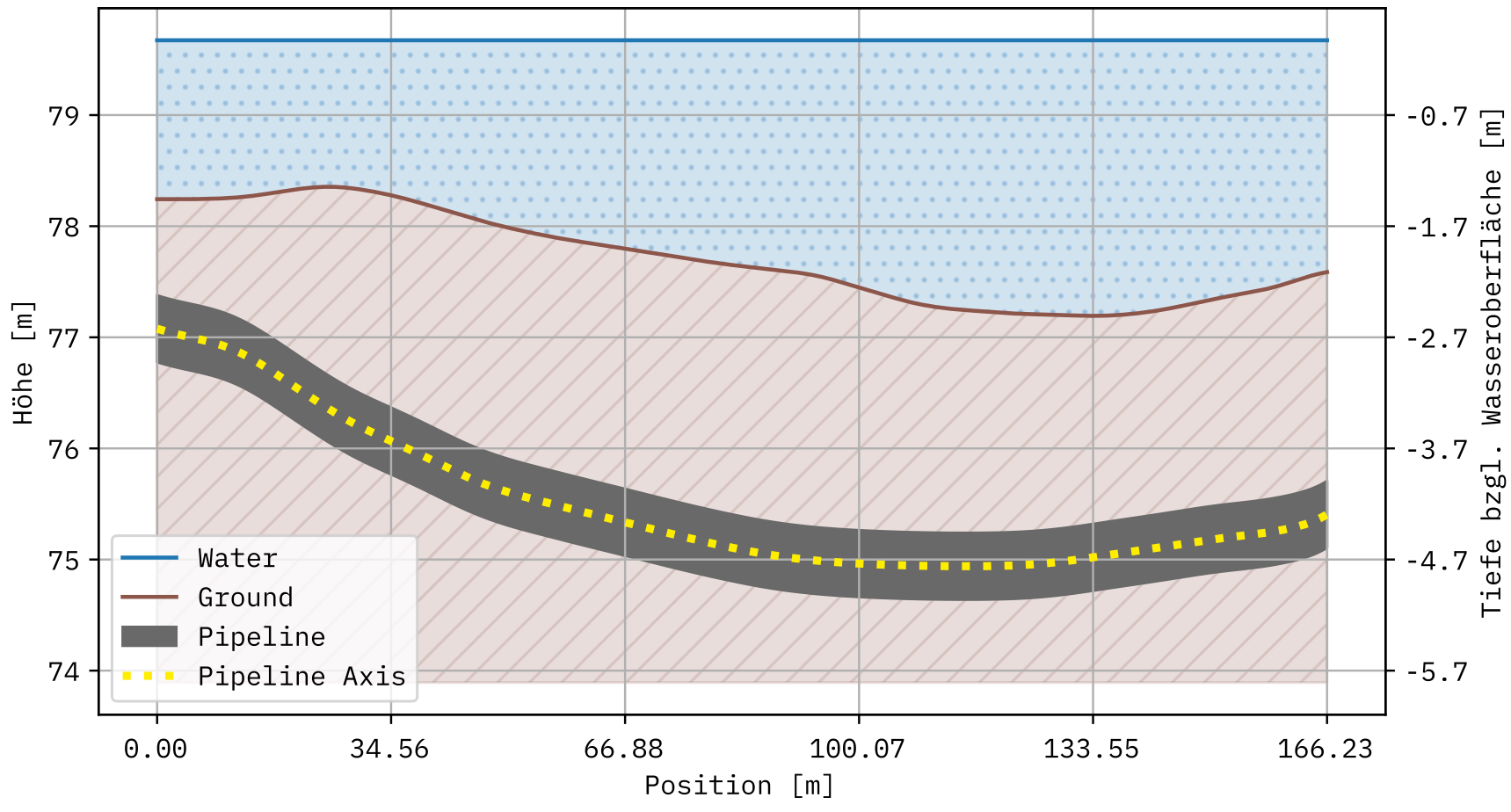
Example result: depth of cover of a pipeline under a water crossing.
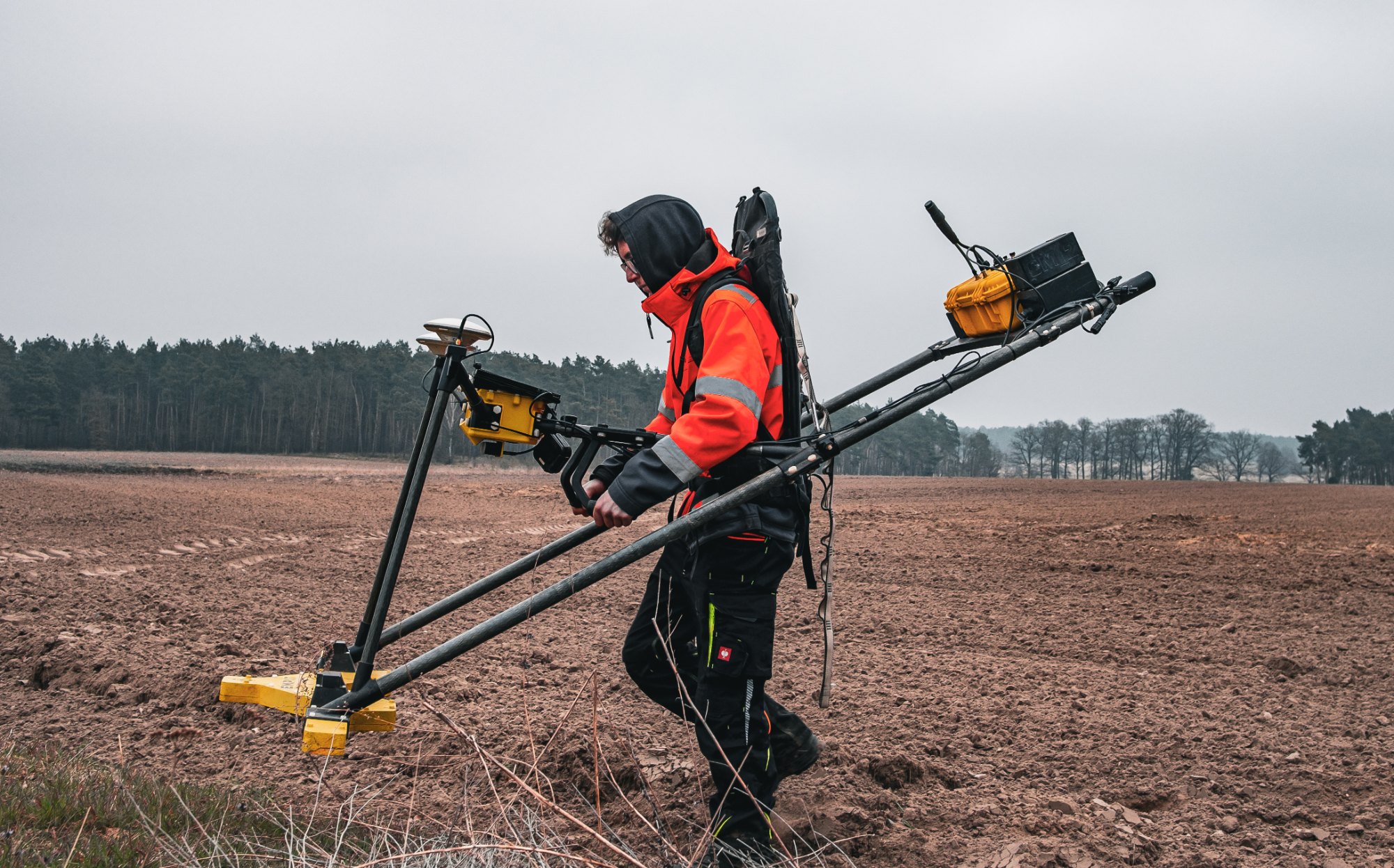
An inspection current is fed into the pipeline through existing cathodic protection test posts. On land, a technician walks the line with the Current Mapper, which measures the magnetic field of that current above the buried pipeline. Water crossings are surveyed by boat, hard-to-reach terrain by drone.
Where the coating is damaged, part of the current leaves the pipe and enters the soil. CMI detects this current loss and locates the defect. A multi-frequency analysis then shows whether the steel is protected by a surface layer or is actively corroding.
The inspection is non-intrusive. The pipeline stays in service the whole time, nothing enters the pipe, and nothing is excavated for the survey.
Operators who work to ECDA use CMI as a complementary indirect inspection tool. See where CMI fits in the four ECDA steps.
EMPIT inspects more than 10,000 km of pipeline a year, with teams in Europe and the USA. More case studies and white papers.
Send us the length, diameter and location of your line. We tell you whether CMI fits and what a pilot section would look like.