
NEW: Onshore Inspections
The Flux
A robust handheld system for corrosion detection and 3D mapping of unpiggable pipelines.
Discover the Flux
Inspect The Unpiggable
NEW: Onshore Inspections
A robust handheld system for corrosion detection and 3D mapping of unpiggable pipelines.
Discover the Flux →
NEW Service
Know how fast every coating defect corrodes, in µm/year, validated against excavations.
See how it works →
FREE: Whitepaper
How CMI separates protected steel from actively corroding steel, without excavation.
Download →A water main condition assessment determines the state of a buried water main, so that the utility can decide whether to replace it, rehabilitate it or keep it in service. The aim is to spend the renewal budget where it is needed and to leave mains with adequate integrity in the ground. Methods range from desktop studies to tools inside the pipe and to inspection from above ground.
On this page
At a glanceWhy it is hardMethodsWith CMIFAQ
| Question | Replace, rehabilitate or keep in service |
| Typical materials | Grey cast iron, ductile iron and steel |
| Classic basis | Age, material and burst history |
| Methods | Desktop studies, leak detection, spot checks at excavations, tools inside the pipe, inspection from above ground |
| Reference | AWWA Manual M77, Condition Assessment of Water Mains |
| From above ground | CMI condition assessment with the main in operation |
Most water mains were never built for inline inspection. Grey cast iron and ductile iron lines have bends, valves, branches and changing diameters. Many have no coating and no cathodic protection. Taking a transmission main out of service is rarely an option, and in older networks the exact route of the pipe is not always known. See cast iron inspection and ductile iron inspection.
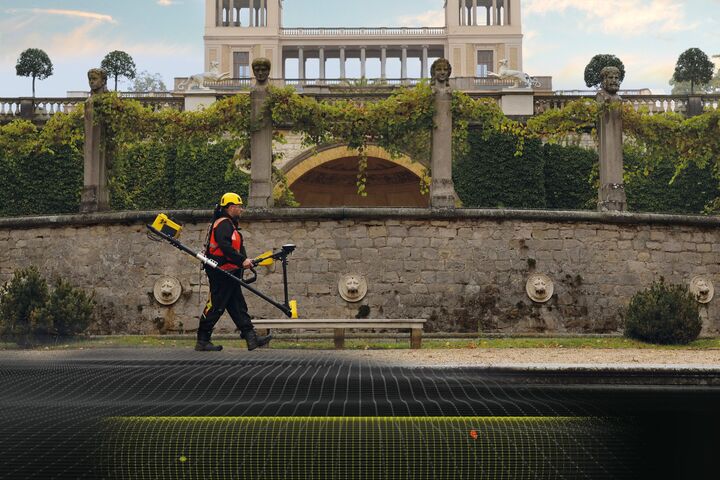
EMPIT feeds a small alternating current into the pipe and measures the magnetic field it creates, from the surface and along the full length of the line. This is Current Magnetometry Inspection (CMI). The main stays in operation the whole time.
CMI shows how fast a location is corroding. It does not measure the remaining wall thickness.
EMPIT has mapped more than 1,000 km of cast iron and ductile iron pipelines in 3D. Water Main Condition Assessment from Above Ground describes the approach in detail.
An evaluation of the state of a buried water main that supports the decision to replace it, rehabilitate it or keep it in service.
Yes. CMI works from above ground while the main stays in operation. No tool enters the pipe.
Yes. CMI works on grey cast iron, ductile iron and steel, coated or uncoated.
Age alone says little about a single main. A condition assessment shows which mains really need action, so that others can stay in service longer.
Planning a renewal programme, or unsure about one critical main? Tell us the length, material and location of the line, and we will tell you whether CMI fits.
Sources
Related terms
Cast Iron InspectionDuctile Iron InspectionDepth of CoverPipeline CorrosionPitting CorrosionPipeline InspectionCorrosion Rate
Read more
30. September 2026
05. June 2026
We use cookies to give you the best possible experience on our website and to improve our communication with you. We only use the data for which you have given us your consent, with the exception of the cookies that are absolutely necessary for the functionality of this website. For more information, please see our privacy policy. Make your choice here:
You can change your consent at any time by clicking on the Cookie Settings link in your footer.
Protects against cross-site request forgery attacks.
Saves the current PHP session.
Cookie from Google for website analytics. Generates statistical data about how visitors use the website. https://policies.google.com/privacy?hl=de