
NEW: Onshore Inspections
The Flux
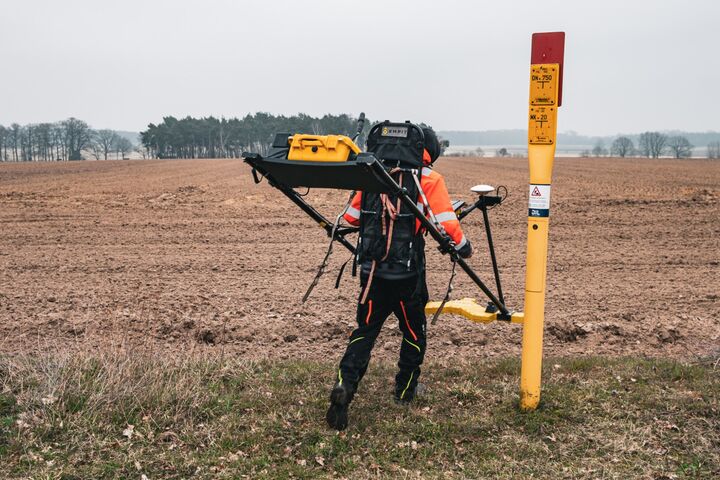
A robust handheld system for corrosion detection and 3D mapping of unpiggable pipelines.
Discover the Flux
Inspect The Unpiggable
NEW: Onshore Inspections
A robust handheld system for corrosion detection and 3D mapping of unpiggable pipelines.
Discover the Flux →
NEW Service
Know how fast every coating defect corrodes, in µm/year, validated against excavations.
See how it works →
FREE: Whitepaper
How CMI separates protected steel from actively corroding steel, without excavation.
Download →Visual inspection is the examination of a pipeline with the eye, directly or through a camera. It is the oldest and most widely used inspection method. It finds what shows at a surface: damaged coating, rust, leaks, deformation, activity along the route. What is buried or inside the wall stays out of its reach.
On this page
At a glanceOn pipelinesWhere it stopsFAQ
| Also called | Visual testing (VT) |
| Direct | Walking the route, examining exposed pipe and welds |
| Remote | Cameras on drones, crawlers and borescopes |
| Finds | Surface condition, leaks, third-party activity, erosion, exposed pipe |
| Limit | Sees only surfaces that are accessible |
A buried pipeline shows nothing at the surface until something has gone wrong. To look at the steel, someone has to dig, and without further information nobody knows where.
EMPIT's Current Magnetometry Inspection (CMI) provides this information from above ground. It locates every coating defect on the buried pipe, gives a corrosion rate in µm per year for each one and records the position and depth of cover. The excavation then goes to the right place. See Corrosion Detection.
They mean the same. Visual testing (VT) is the term used in the standards for non-destructive testing.
The intervals are set by national rules and by the operator and depend on the location and the type of line.
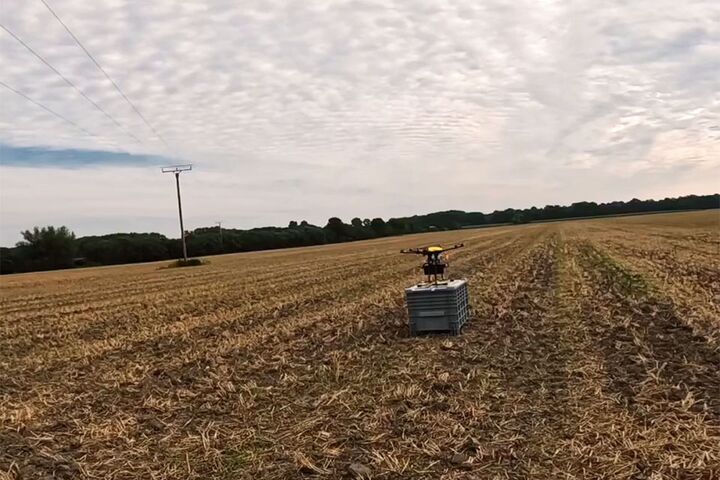
For looking at the surface of the route, in many cases yes. A drone with CMI sensors goes further and inspects the buried pipe itself.
If you want to know what an above-ground inspection would show on your line, send us the length, diameter and location of the pipeline. We will tell you whether CMI fits and what a pilot section would look like.
Sources
Related terms
Non-Destructive TestingDrone InspectionPipeline InspectionLiquid Penetrant TestingDepth of Cover
Read more
28. August 2023
We use cookies to give you the best possible experience on our website and to improve our communication with you. We only use the data for which you have given us your consent, with the exception of the cookies that are absolutely necessary for the functionality of this website. For more information, please see our privacy policy. Make your choice here:
You can change your consent at any time by clicking on the Cookie Settings link in your footer.
Protects against cross-site request forgery attacks.
Saves the current PHP session.
Cookie from Google for website analytics. Generates statistical data about how visitors use the website. https://policies.google.com/privacy?hl=de