
NEW: Onshore Inspections
The Flux
A robust handheld system for corrosion detection and 3D mapping of unpiggable pipelines.
Discover the Flux
Inspect The Unpiggable
NEW: Onshore Inspections
A robust handheld system for corrosion detection and 3D mapping of unpiggable pipelines.
Discover the Flux →
NEW Service
Know how fast every coating defect corrodes, in µm/year, validated against excavations.
See how it works →
FREE: Whitepaper
How CMI separates protected steel from actively corroding steel, without excavation.
Download →NACE stands for the National Association of Corrosion Engineers, later NACE International. The association was founded in 1943 and wrote many of the standards that pipeline operators use for corrosion control. In 2021 NACE merged with the coatings society SSPC to form AMPP, the Association for Materials Protection and Performance.
On this page
At a glanceStandardsIn practiceFAQ
| Stands for | National Association of Corrosion Engineers |
| Founded | 1943 |
| Today | AMPP, formed in 2021 by the merger of NACE International and SSPC |
| Known for | Standards and certifications for corrosion control, cathodic protection and coatings |
| Standard names | SP for standard practice, TM for test method, MR for material requirements |
The documents keep their NACE numbers and are now published by AMPP.
The survey methods in these standards find coating defects and measure potentials. They do not show whether the steel at a coating defect is corroding. Direct assessment therefore confirms its results by excavation.
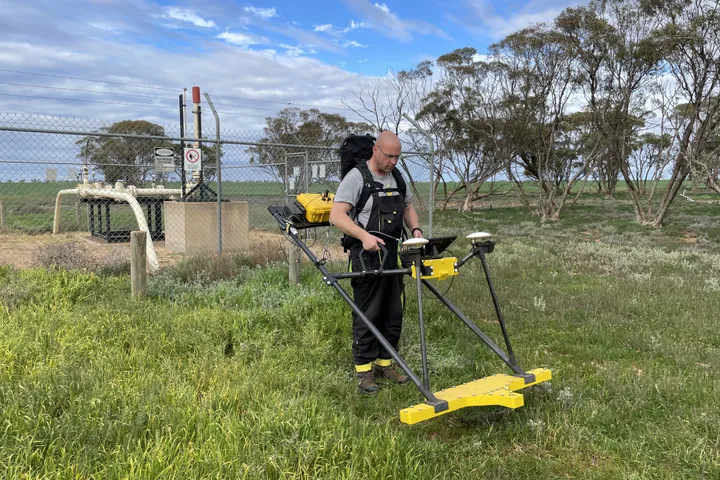
EMPIT's Current Magnetometry Inspection (CMI) adds this information from above ground: it locates every coating defect and gives a corrosion rate in µm per year for each one. ECDA on Unpiggable Pipelines shows how the two fit together.
Yes. NACE International and SSPC merged in 2021 to form AMPP, the Association for Materials Protection and Performance.
The control of external corrosion on underground or submerged metallic piping systems, including the criteria for cathodic protection.
Yes. They are maintained and published by AMPP and keep their NACE numbers.
If you want to know what an above-ground inspection would show on your line, send us the length, diameter and location of the pipeline. We will tell you whether CMI fits and what a pilot section would look like.
Sources
Read more

02. August 2023
We use cookies to give you the best possible experience on our website and to improve our communication with you. We only use the data for which you have given us your consent, with the exception of the cookies that are absolutely necessary for the functionality of this website. For more information, please see our privacy policy. Make your choice here:
You can change your consent at any time by clicking on the Cookie Settings link in your footer.
Protects against cross-site request forgery attacks.
Saves the current PHP session.
Cookie from Google for website analytics. Generates statistical data about how visitors use the website. https://policies.google.com/privacy?hl=de