EMPIT at the 3R Praxistag Korrosionsschutz and Symposium Pipelinetechnik
EMPIT was represented with its own contributions at two 3R technical events in spring 2026. The Praxistag Korrosionsschutz and the Symposium Pipelinetechnik put four topics in the spotlight that are reshaping cathodic protection (CP) and pipeline inspection: autonomous robot dogs in the field, standard-compliant effectiveness verification with Current Magnetometry Inspection (CMI) from the DVGW NEMEK research project, seamless soil resistivity testing during regular inspection and airborne methane leak detection under the EU Methane Regulation.
Praxistag Korrosionsschutz – intelligent robot dogs in cathodic protection
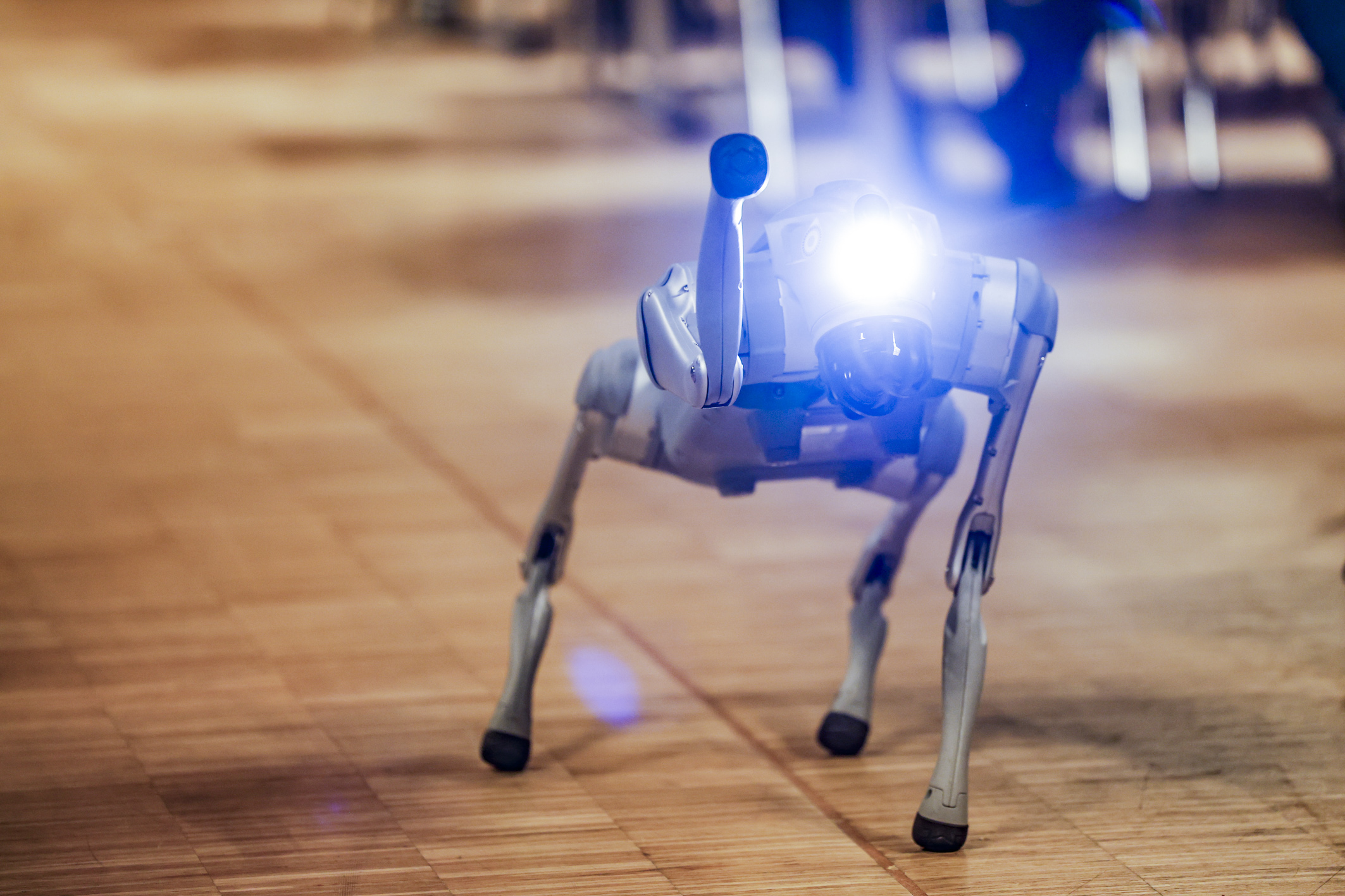
Qualified field personnel for CP measurements is becoming harder to find — yet the effectiveness verification required by EN ISO 15589-1 still has to be delivered. In his presentation "Use of intelligent robot dogs in cathodic protection," Mark Glinka showed how an autonomous inspection robot takes on exactly this task.
The robot moves independently along the pipeline route, capturing potential gradients with a measurement step size of 10 cm through direct soil contact — delivering the foundation for CP assessment using the IR-free potential in accordance with ISO 15589-1. This makes standard-compliant effectiveness verification possible even where qualified personnel is unavailable or where safe deployment for people is not feasible. The basis is Current Magnetometry Inspection (CMI), developed in Germany and proven on more than 10,000 km of pipeline.
A further advantage lies in the robot's much finer measurement spacing compared to conventional methods. The dense 10 cm resolution allows coating defects to be modeled far more reliably and substantially reduces the risk of missing localized voltage gradients that coarser measurement intervals would overlook.
Praxistag Korrosionsschutz – Cathodic protection effectiveness verification and soil resistivity measurements
The Praxistag also brought the effectiveness verification of cathodic protection into scientific focus — through two independent contributions from third parties rather than from EMPIT itself, one addressing CP effectiveness verification and the other the related but distinct topic of soil resistivity.
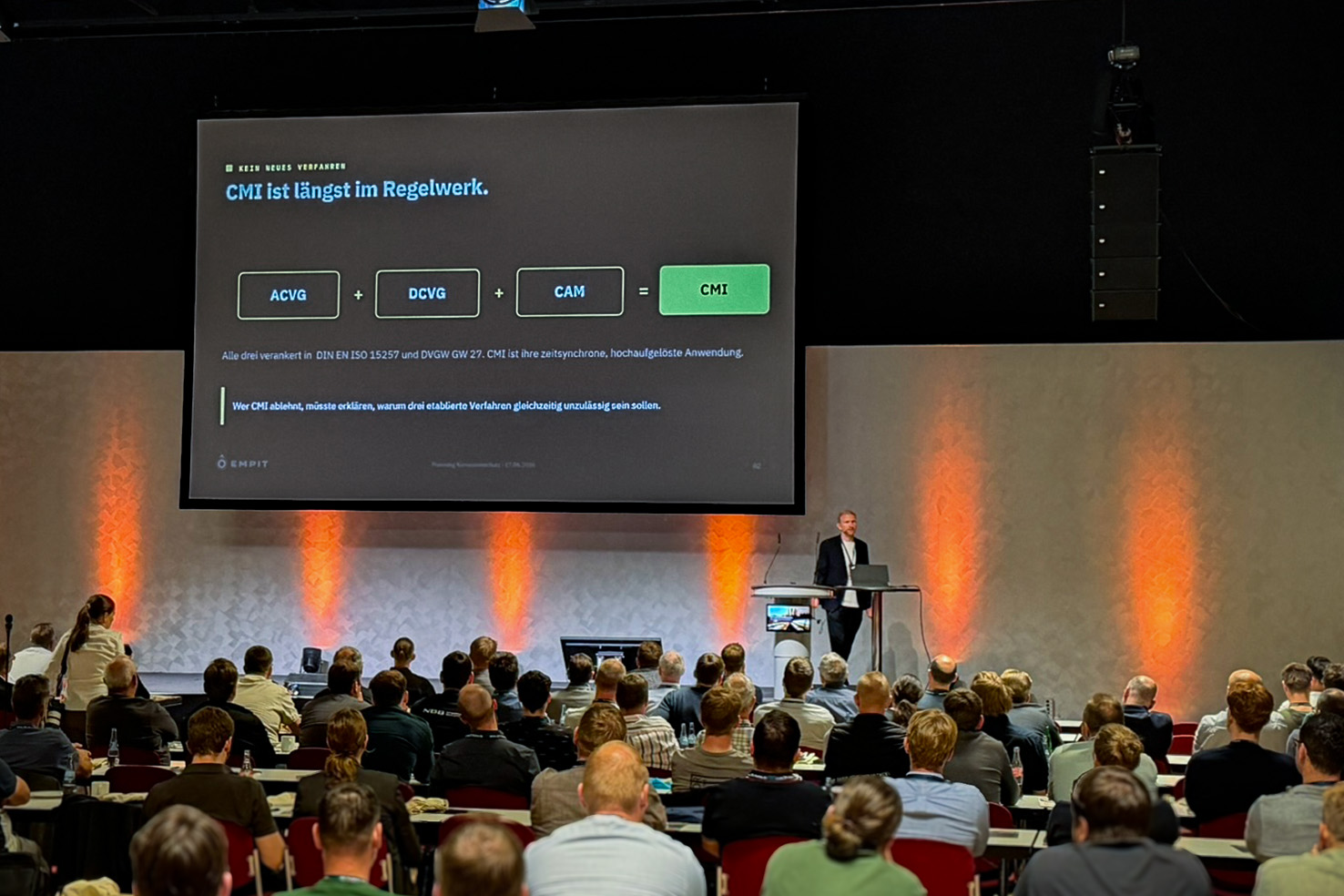
Dr. Markus Büchler (SGK Swiss Society for Corrosion Protection, Zurich) presented the key findings of the project in his presentation "Verifying the effectiveness of cathodic protection: latest findings from the DVGW NEMEK research project."
Within NEMEK, new methods for CP effectiveness verification were investigated both under defined boundary conditions on a simulated pipeline and on real pipeline installations of the project partners. The project compared conventional voltage-based methods — the intensive, reduction, and correlation measurements — with Current Magnetometry Inspection, which assesses the effectiveness of cathodic protection non-invasively from above ground. The goal was to benchmark the methods against one another and to achieve a reliable assessment also for unpiggable pipelines. The results showed that CMI is more reliable in assessing the conventional parameter of the IR-free potential. Beyond that, CMI introduces a novel approach: by identifying a surface layer at the pipe surface at the defect location, it can verify CP effectiveness and assess even defects too small for voltage gradient analysis.
Closely related was the contribution "Continuous measurement of specific soil resistivity" by Nils Plonka (Thyssengas GmbH, Duisburg) — a pipeline operator that relies on CMI results in its own condition assessment rather than performing the inspection itself. Specific soil resistivity is an established parameter in cathodic protection, but it is often represented in a simplified way. Given rising demands on pipeline condition assessment, the presentation showed how new data sources and technologies — including continuous soil resistivity measurement during CMI — enable a more differentiated assessment and allow existing models to be developed further in a targeted way.
Both presentations were of excellent quality, and we greatly appreciate external experts and operators openly sharing their results and experience with CMI.
Symposium Pipelinetechnik – methane leak detection with a fully automated drone
At the 3R Symposium Pipelinetechnik, Dr. Jakob Stumme addressed how operators can meet the EU Methane Regulation efficiently. His presentation "Leak detection with a fully automated drone in compliance with the EU Methane Regulation" introduced EMPIT's METHASCAN system.
The EU Methane Regulation requires pipeline operators to inspect all gas infrastructure for methane emissions at regular intervals. METHASCAN performs methane emission measurement and leak localization from the air using a SAIL-III-certified drone. The drone operates BVLOS with a range of 150 km per battery charge; its certification also permits inspection over populated areas as an alternative for helicopter based flights.
Conclusion
Whether an autonomous robot dog in cathodic protection, standard-compliant effectiveness verification with CMI, or fully automated methane leak detection: EMPIT's contributions at the 3R Praxistag Korrosionsschutz and the Symposium Pipelinetechnik show how pipeline inspection and corrosion protection can be automated while remaining standard-compliant — precisely where personnel is more difficult to find and access is difficult.