
NEW: Onshore Inspections
The Flux
A robust handheld system for corrosion detection and 3D mapping of unpiggable pipelines.
Discover the Flux
Inspect The Unpiggable
NEW: Onshore Inspections
A robust handheld system for corrosion detection and 3D mapping of unpiggable pipelines.
Discover the Flux →
NEW Service
Know how fast every coating defect corrodes, in µm/year, validated against excavations.
See how it works →
FREE: Whitepaper
How CMI separates protected steel from actively corroding steel, without excavation.
Download →Pressure is the force that the fluid exerts on the pipe wall per unit of area. It moves the product through the pipeline, and it is the main load the pipe is designed for. Pressure is given in bar, megapascal or pounds per square inch.
On this page
At a glanceIntegrityInspectionFAQ
| Units | bar, MPa, psi |
| Stress in the wall | Hoop stress = pressure × diameter / (2 × wall thickness) |
| Legal limit | MAOP for gas lines, MOP for liquid lines |
| Pressure cycles | Drive fatigue cracks |
| For pigging | A tool needs enough pressure and flow to be driven through the line |
The hoop stress acts around the circumference and is the largest stress from pressure. A defect matters when the remaining wall can no longer carry it. This is why metal loss is assessed as a failure pressure, and why operators lower the pressure when a critical defect is found.
Pressure does not cover everything. Loads along the pipe axis, for example bending strain from ground movement, add to it and are not part of the pressure design.
In-line inspection tools are driven by the product. Lines with low pressure or low flow cannot move a tool at a steady speed, which is one of the reasons a line is unpiggable.
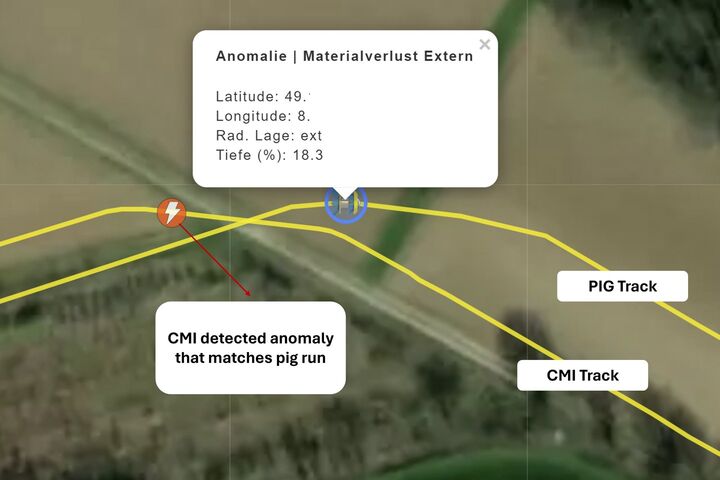
EMPIT's Current Magnetometry Inspection (CMI) inspects from above ground. Nothing enters the pipe, and the line stays in service while it is surveyed. See What Is an Unpiggable Pipeline.
Hoop stress is the stress around the circumference of the pipe caused by internal pressure. It equals pressure times diameter divided by twice the wall thickness.
The design pressure is the pressure the pipe is calculated for. The operating pressure is the actual pressure in service and stays at or below the allowed maximum.
Every change in pressure is a load cycle. Over many cycles, cracks can start and grow at welds, dents and other stress raisers.
If you want to know what an above-ground inspection would show on your line, send us the length, diameter and location of the pipeline. We will tell you whether CMI fits and what a pilot section would look like.
Sources
Read more

We use cookies to give you the best possible experience on our website and to improve our communication with you. We only use the data for which you have given us your consent, with the exception of the cookies that are absolutely necessary for the functionality of this website. For more information, please see our privacy policy. Make your choice here:
You can change your consent at any time by clicking on the Cookie Settings link in your footer.
Protects against cross-site request forgery attacks.
Saves the current PHP session.
Cookie from Google for website analytics. Generates statistical data about how visitors use the website. https://policies.google.com/privacy?hl=de