
NEW: Onshore Inspections
The Flux
A robust handheld system for corrosion detection and 3D mapping of unpiggable pipelines.
Discover the Flux
Inspect The Unpiggable
NEW: Onshore Inspections
A robust handheld system for corrosion detection and 3D mapping of unpiggable pipelines.
Discover the Flux →
NEW Service
Know how fast every coating defect corrodes, in µm/year, validated against excavations.
See how it works →
FREE: Whitepaper
How CMI separates protected steel from actively corroding steel, without excavation.
Download →A pipeline rupture is the sudden break of the pipe wall over a large opening. Unlike a leak, which releases product through a small hole, a rupture releases it within seconds and can run along the pipe. Ruptures are rare, but they have the most severe consequences.
On this page
At a glanceCausesPreventionFAQ
| Leak | Small opening, slow release, often found by monitoring |
| Rupture | Large opening, sudden release, line out of service |
| Main causes | Corrosion, cracks, third-party damage, ground movement |
| Prevention | Find the threat while it is still a defect: integrity management |
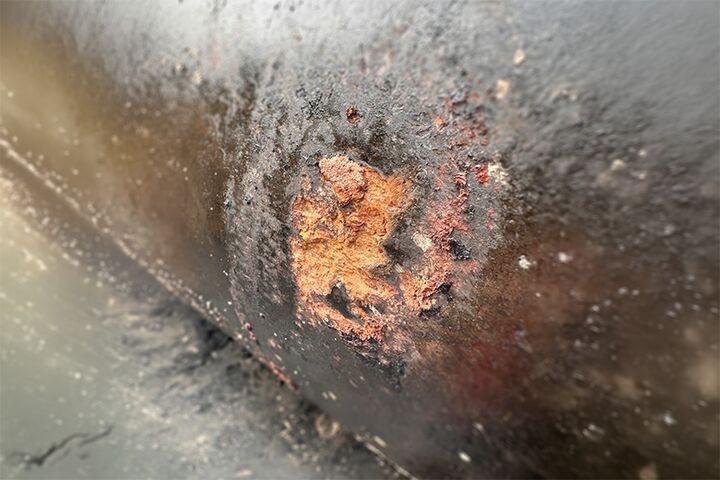
Many ruptures start as a defect that could have been found. Operators inspect their lines, assess what they find and repair in time. In-line inspection does this where a pig can run. Around 40% of the world's pipelines are unpiggable.
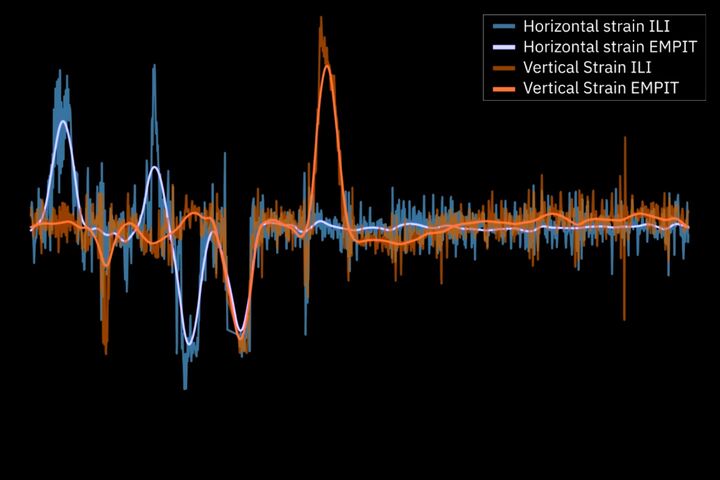
For these lines EMPIT uses Current Magnetometry Inspection (CMI) from above ground. One survey locates the coating defects and gives a corrosion rate for each, and it delivers depth of cover and bending strain, the two quantities behind third-party damage and ground movement. See the service Corrosion Detection.
A leak releases product through a small opening while the pipe keeps its shape. A rupture is a sudden break over a large opening that takes the line out of service.
It depends on the region and the network. Corrosion, third-party damage, material and weld defects and ground movement are the main groups in incident statistics.
Not to the day. But the defects that lead to ruptures can be found and assessed in advance, which is the purpose of integrity management.
If you want to know which threats act on your line, send us the length, diameter and location of the pipeline. We will tell you whether CMI fits and what a pilot section would look like.
Sources
Related terms
Integrity ManagementPipeline CorrosionThird Party DamageGeotechnical HazardsMAOPFatigue Cracks
Read more
05. November 2026
21. November 2026
We use cookies to give you the best possible experience on our website and to improve our communication with you. We only use the data for which you have given us your consent, with the exception of the cookies that are absolutely necessary for the functionality of this website. For more information, please see our privacy policy. Make your choice here:
You can change your consent at any time by clicking on the Cookie Settings link in your footer.
Protects against cross-site request forgery attacks.
Saves the current PHP session.
Cookie from Google for website analytics. Generates statistical data about how visitors use the website. https://policies.google.com/privacy?hl=de