
NEW: Onshore Inspections
The Flux
A robust handheld system for corrosion detection and 3D mapping of unpiggable pipelines.
Discover the Flux
Inspect The Unpiggable
NEW: Onshore Inspections
A robust handheld system for corrosion detection and 3D mapping of unpiggable pipelines.
Discover the Flux →
NEW Service
Know how fast every coating defect corrodes, in µm/year, validated against excavations.
See how it works →
FREE: Whitepaper
How CMI separates protected steel from actively corroding steel, without excavation.
Download →The maximum allowable operating pressure (MAOP) is the highest pressure at which a pipeline or a segment of it may be operated under the regulations. The term comes from the US rules for gas pipelines. It is not a property of the pipe alone, but the result of design, pressure test and operating history.
On this page
At a glanceHow it is setDefectsFAQ
| Applies to | Gas pipelines under US rules. Liquid lines use maximum operating pressure (MOP) |
| Set by | The lowest of several limits: design pressure, test pressure divided by a factor, pressure history |
| Lowered by | A change of location class or a permanent derating. Defects lead to a temporary pressure reduction until repair |
| Restored by | Repair, replacement or a new assessment |
The rules compare several values and take the lowest. The design pressure follows from wall thickness, diameter, steel grade and a design factor for the location. The pressure test proves a margin above the operating pressure. For older lines the highest pressure of a past reference period can also set the limit. If records are missing, the operator has to reconfirm the MAOP.
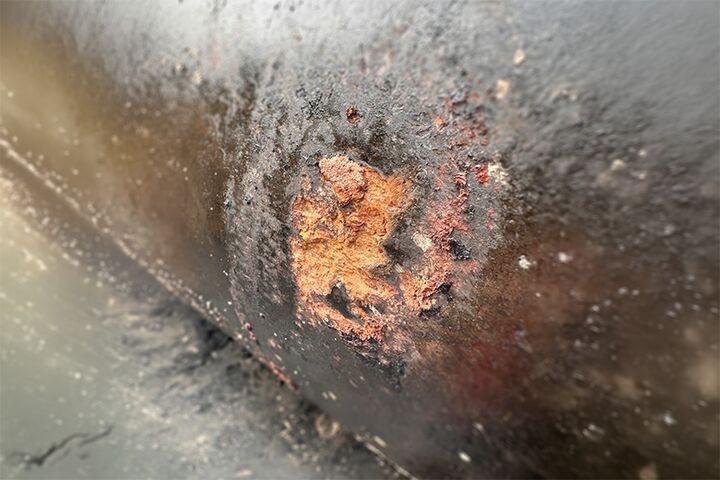
Corrosion and other defects reduce the pressure a pipe can hold. When an inspection finds a defect whose calculated failure pressure is too close to the MAOP, the operator lowers the pressure until the defect is repaired. Every such reduction costs transport capacity.
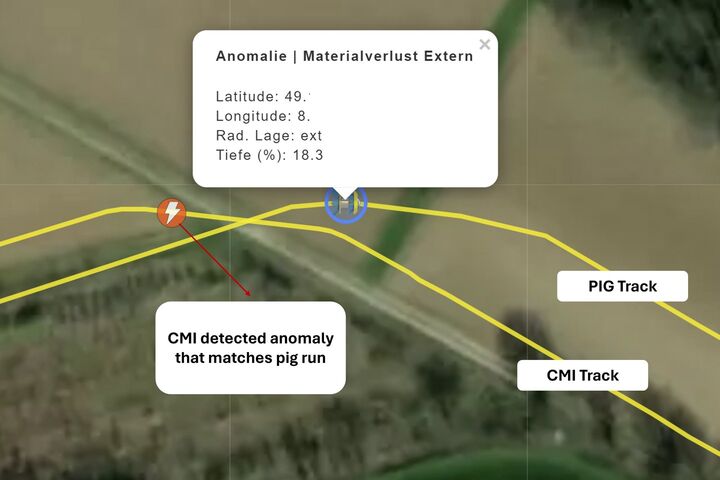
Finding defects early is therefore also a commercial question. EMPIT's Current Magnetometry Inspection (CMI) shows from above ground which coating defects are corroding and how fast, so that repairs can be planned before the wall loss limits the pressure. The wall thickness itself is measured by in-line inspection or at the excavated pipe. See Corrosion Rate.
MAOP is the legal limit for gas pipelines under US rules. MOP, maximum operating pressure, is the corresponding term for liquid pipelines and is also used for the highest pressure in normal operation.
The design pressure is calculated from the pipe and a design factor. The MAOP is the lowest of several limits, of which the design pressure is one.
Yes. It is lowered when a higher location class or a permanent derating requires it, and it can be confirmed or raised by testing and assessment. Defects usually lead to a temporary pressure reduction until repair.
If you want to know what an above-ground inspection would show on your line, send us the length, diameter and location of the pipeline. We will tell you whether CMI fits and what a pilot section would look like.
Sources
Read more
05. November 2026
We use cookies to give you the best possible experience on our website and to improve our communication with you. We only use the data for which you have given us your consent, with the exception of the cookies that are absolutely necessary for the functionality of this website. For more information, please see our privacy policy. Make your choice here:
You can change your consent at any time by clicking on the Cookie Settings link in your footer.
Protects against cross-site request forgery attacks.
Saves the current PHP session.
Cookie from Google for website analytics. Generates statistical data about how visitors use the website. https://policies.google.com/privacy?hl=de