
NEW: Onshore Inspections
The Flux
A robust handheld system for corrosion detection and 3D mapping of unpiggable pipelines.
Discover the Flux
Inspect The Unpiggable
NEW: Onshore Inspections
A robust handheld system for corrosion detection and 3D mapping of unpiggable pipelines.
Discover the Flux →
NEW Service
Know how fast every coating defect corrodes, in µm/year, validated against excavations.
See how it works →
FREE: Whitepaper
How CMI separates protected steel from actively corroding steel, without excavation.
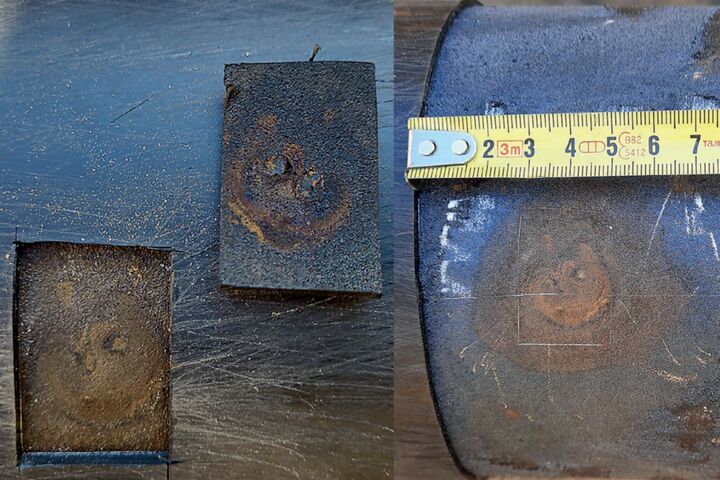
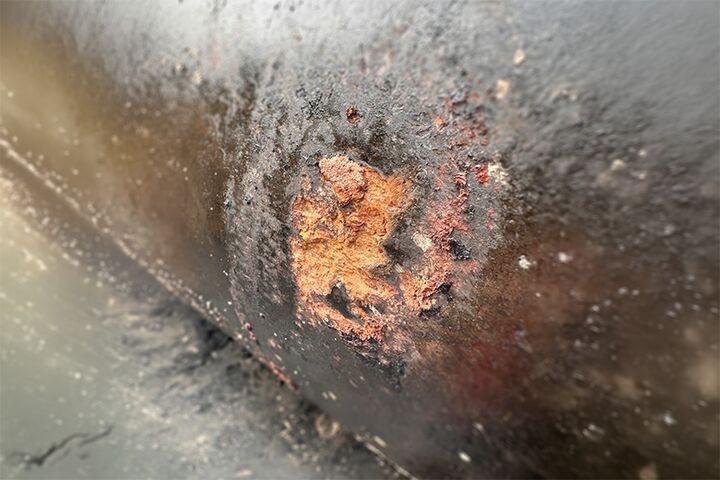
Download →Crevice corrosion is local corrosion inside a narrow gap where the electrolyte cannot exchange with its surroundings. Oxygen is used up in the gap, the chemistry there turns aggressive, and the metal inside dissolves while the surface outside looks intact. Typical gaps are under gaskets, clamps and pipe supports.
On this page
At a glanceOn pipelinesDetectionFAQ
| Where | Flanges, gaskets, clamps, pipe supports, lap joints, under deposits |
| Mechanism | Stagnant electrolyte, oxygen depletion and acidification inside the gap |
| On buried pipelines | Under disbonded coating |
| Why critical | Hidden from view and often from the protective current |
On piping above ground the classic places are pipe supports and clamps, where water stays between the pipe and the support. On buried pipelines the gap forms under coating that has lost its bond to the steel. Water gets behind the coating, and the coating shields the steel from the cathodic protection current.
Crevice corrosion is found by lifting the pipe off the support or opening the joint, or with methods that look through the gap, such as guided wave testing and radiographic testing.
On buried lines, EMPIT's Current Magnetometry Inspection (CMI) locates coating defects from above ground and classifies the steel at each one as active or passivated. Because CMI works with an alternating inspection current, it has located defects that were shielded for direct current and still conductive for alternating current. CMI cannot tell from its measurement whether a coating is disbonded.
Both are local. Pitting starts on an open surface, crevice corrosion inside a gap where the electrolyte stands still.
Water stays in the gap between pipe and support, the coating is worn there, and the area cannot be seen or painted.
Only if the protective current reaches the steel in the gap. Under shielding coating it may not.
If you want to know what an above-ground inspection would show on your line, send us the length, diameter and location of the pipeline. We will tell you whether CMI fits and what a pilot section would look like.
Sources
Related terms
DisbondmentPitting CorrosionPipeline CorrosionCathodic ProtectionCorrosion Under Insulation
Read more
05. November 2026
We use cookies to give you the best possible experience on our website and to improve our communication with you. We only use the data for which you have given us your consent, with the exception of the cookies that are absolutely necessary for the functionality of this website. For more information, please see our privacy policy. Make your choice here:
You can change your consent at any time by clicking on the Cookie Settings link in your footer.
Protects against cross-site request forgery attacks.
Saves the current PHP session.
Cookie from Google for website analytics. Generates statistical data about how visitors use the website. https://policies.google.com/privacy?hl=de