
NEW: Onshore Inspections
The Flux
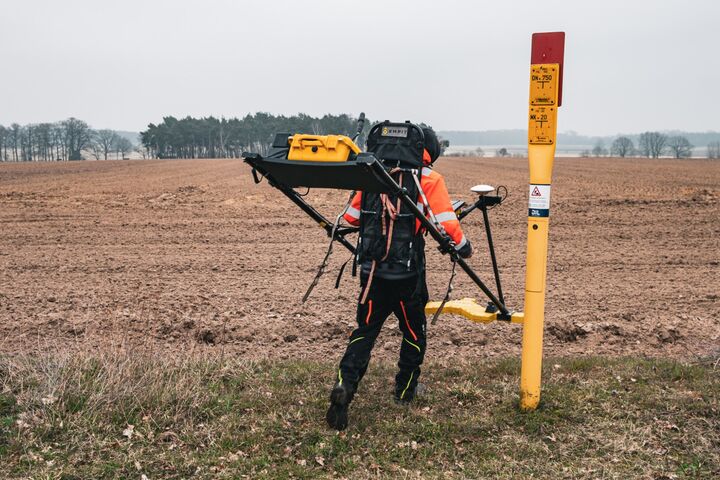
A robust handheld system for corrosion detection and 3D mapping of unpiggable pipelines.
Discover the Flux
Inspect The Unpiggable
NEW: Onshore Inspections
A robust handheld system for corrosion detection and 3D mapping of unpiggable pipelines.
Discover the Flux →
NEW Service
Know how fast every coating defect corrodes, in µm/year, validated against excavations.
See how it works →
FREE: Whitepaper
How CMI separates protected steel from actively corroding steel, without excavation.
Download →Corrosion under insulation (CUI) is the corrosion of piping and equipment beneath thermal insulation. Water gets through damaged cladding, the insulation holds it against the steel, and the metal corrodes out of sight. In refineries and chemical plants CUI is one of the main causes of piping leaks.
On this page
At a glanceWhy it happensInspectionFAQ
| Affects | Insulated piping and vessels above ground |
| Cause | Water in the insulation, from rain, wash water or condensation |
| Critical range | Carbon steel between about -12 °C and 175 °C, according to API RP 583 |
| Inspection | Visual after removing insulation, radiographic testing, pulsed eddy current, guided wave testing |
Insulation is meant to stay dry. In practice the cladding is opened for maintenance, sealant ages, and water finds its way in. Wet insulation keeps the steel surface moist for long periods, and salts from the insulation or the atmosphere concentrate there. Lines that cycle between hot and cold are hit hardest, because they draw in moisture again and again.
The direct way is to remove the insulation and look. Because that is expensive, operators screen first: with thermography for wet insulation, with pulsed eddy current or radiography for wall loss through the insulation, and with guided waves along straight runs.
CUI is a threat of insulated piping above ground. Where the same system continues below ground, the outside of the pipe is assessed differently. EMPIT's Current Magnetometry Inspection (CMI) locates coating defects on buried piping from above ground and gives a corrosion rate for each.
API RP 583 names carbon steel that operates between about -12 °C and 175 °C as susceptible. Lines that cycle through this range are most at risk.
With screening methods such as pulsed eddy current, radiography, guided wave testing and thermography. Findings are confirmed by removing the insulation.
With a protective coating on the steel under the insulation, intact cladding and sealing, and insulation that does not hold water.
If you want to know what an above-ground inspection would show on your line, send us the length, diameter and location of the pipeline. We will tell you whether CMI fits and what a pilot section would look like.
Sources
Related terms
Crevice CorrosionPipeline CorrosionGuided Wave TestingNon-Destructive TestingRadiographic Testing
Read more

We use cookies to give you the best possible experience on our website and to improve our communication with you. We only use the data for which you have given us your consent, with the exception of the cookies that are absolutely necessary for the functionality of this website. For more information, please see our privacy policy. Make your choice here:
You can change your consent at any time by clicking on the Cookie Settings link in your footer.
Protects against cross-site request forgery attacks.
Saves the current PHP session.
Cookie from Google for website analytics. Generates statistical data about how visitors use the website. https://policies.google.com/privacy?hl=de